
How a Sewage Grinder Pump System Prevents Blockages


One of the most prevalent reasons for wastewater system failure is blockages. They develop at a gradual pace, quite often undetected, and only manifest themselves when it is time to restrict flow or when there is a back up. These distractions in the business and local context bring lost time, cleanup expenses, and operational risk. This explains why a sewage grinder pump system is a proactive solution to most facilities, as opposed to a problem solver.
Grinder pump systems prevent pipe clogging rather than letting solid waste pass through pipes intact, unlike the method used previously. The design is based on durability, uniformity, and prolonged flow protection.
Why blockages form in wastewater systems
Understanding blockages begins with how waste behaves after disposal.
Solid waste rarely moves as smoothly as water
Wastewater does not carry only liquid. It also contains paper goods, organic matters and debris which do not break down at the same rate. With time, these substances accumulate along the walls of the pipes or at points of change of level. Unchecked deposition causes resistance and retards flow.
Pipe size and slope increase vulnerability
Debris particularly blocks smaller pipes and systems of low slope. The force of gravity might not be sufficient to cause solids to move uniformly.
What a sewage grinder pump system is designed to do
Grinder pump systems change how waste enters the piping network.
Breaking solids into manageable particles
A sewage grinder pump system entails cutting machines that chop solid waste into fine particles of uniform sizes. Such particles travel easier together with wastewater.
The system helps to avoid the solids catching or settling by reducing size and density.
Supporting pressurized wastewater transport
After grinding, waste is pushed through pipes under pressure. This pressurized movement reduces dependence on gravity.
Consistent pressure helps maintain steady flow across longer distances.
How grinding action directly prevents blockages
The grinding process is central to system performance.
Eliminating large debris before it enters pipes
Minimize objects that can lead to clogs, such as wipes or fibrous substances, before they flow to the downstream piping. This tracking at an early stage inhibits concentration at the weak areas.
Creating uniform waste consistency
A homogenous particle size will enable the wastewater to act more predictably. Flow is constant, even in complicated layouts of pipes. Frequency of maintenance is lowered by predictability.
Comparing grinder pumps to traditional wastewater pumps
Different pump types address different challenges.
Limitations of non-grinding pump systems
Standard pumps move waste but do not alter its composition. Solids remain intact as they travel through pipes. This increases the chance of snagging or settling.
Where wastewater screw pump systems differ
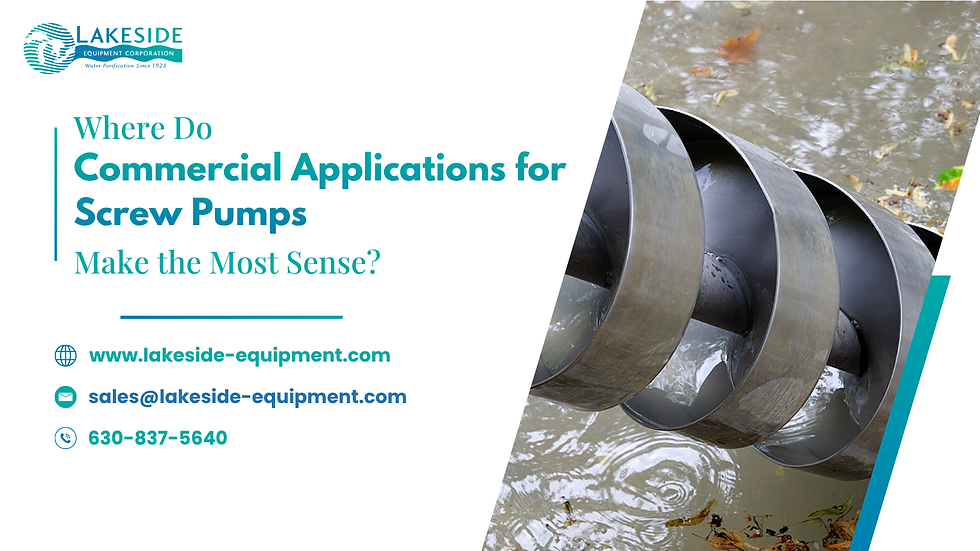
A wastewater screw pump is often used for large-volume, low-head applications. It moves solids gently without grinding.
While effective in certain settings, screw pumps rely on open flow paths and may not suit systems with small-diameter pipes.
Why commercial systems benefit from grinder pumps
Commercial environments introduce higher risk.
Higher waste volume and variability
Restaurants, hospitals, and industrial facilities generate diverse waste streams. Consistency cannot be assumed.
A commercial sewage grinder pump system handles this variability by reducing all solids to a predictable form.
Reduced downtime and emergency response
Blockages in commercial systems often require immediate action. Grinder pumps reduce emergency callouts by preventing clogs before they form. Prevention supports continuity of operations.
How grinder pumps protect downstream infrastructure
Blockage prevention extends beyond the pump itself.
Reduced stress on pipes and fittings
Smooth, consistent flow lowers pressure fluctuations. Pipes experience less wear over time. This extends infrastructure lifespan.
Protecting treatment equipment
Downstream treatment systems operate more efficiently when influent is consistent. Grinder pumps help stabilize incoming flow. Stable input supports better treatment performance.
Maintenance considerations that support blockage prevention
Proper operation depends on regular care.
Monitoring cutting components
Cutters experience wear over time. Routine inspection ensures grinding efficiency remains high. Well-maintained cutters prevent partial grinding issues.
Preventive servicing schedules
Scheduled maintenance reduces the chance of unexpected failure. Servicing focuses on seals, motors, and cutting assemblies. Consistency supports long-term reliability.
System design factors that influence performance
Design choices affect blockage prevention.
Matching pump capacity to application
Oversized or undersized systems create inefficiency. Proper sizing ensures waste moves at the correct velocity. Correct sizing reduces buildup risk.
Integrating controls and alarms
Modern systems include monitoring features that alert operators to abnormal conditions. Early warning allows intervention before blockages develop. Visibility improves control.
Frequently Asked Questions
1. What types of systems benefit most from a sewage grinder pump system? Sewage grinder pump systems particularly come in handy where commercial and municipal facilities have small diameter pipes, low slope or when there is a fluctuating amount of waste that poses a higher probability of getting clogged.
2. How does a grinder pump differ from a standard wastewater pump? A grinder pump, unlike a regular pump, cuts the solids into small particles. Which contributes to avoiding clogs and enabling a more comfortable and stable flow.
3. Do sewage grinder pump systems reduce long-term maintenance needs? Yes, grinder pump systems can reduce emergency maintenance and system downtime by inhibiting the solid buildup and the load on downstream equipment and pipes.
Conclusion: A practical approach to preventing wastewater blockages
Blockages do not usually present themselves earlier yet they are mostly not noticed until they have caused damage. By operating a sewage grinder pump system, the root cause is eliminated. Because the solids are reduced before they pose a threat to flow. These systems prevent the damage of pipes through grinding & pressurization. The regular handling of waste, minimize maintenance, and ensure continuous operation.


Comments