
What Factors Matter in Commercial Sewage Lift Station Design

Wastewater systems are not something that comes to mind until something goes amiss. It could be a slow drain, or even worse, a backup, which in the first place should not happen. Under the carpet, such systems as lift stations are working much more than most individuals are aware. And that is where commercial sewage lift station design comes in, although most businesses may not be looking at that closely.
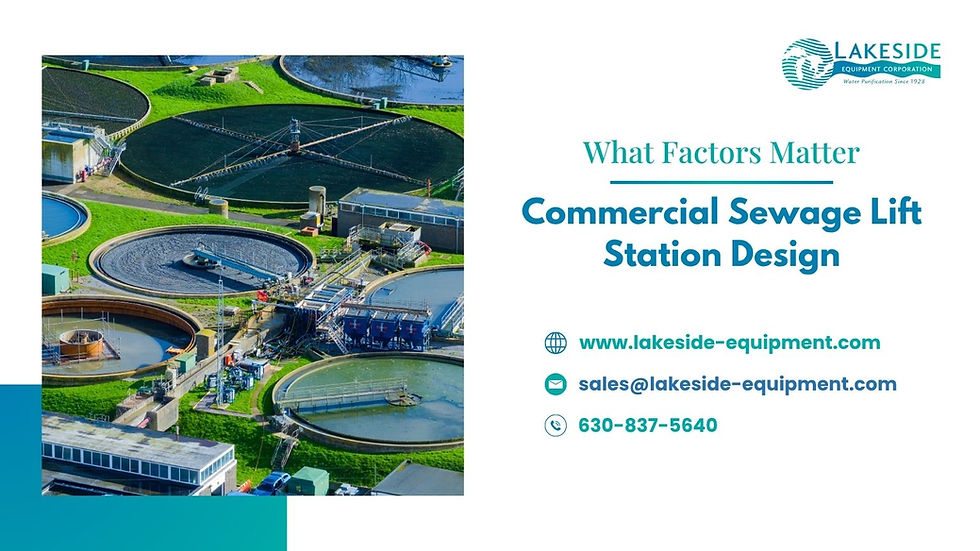
The system is well designed and does not attract attention. It just works. To get there you need planning, the appropriate equipment and understanding of how everything goes together.
What a Sewage Lift Station Actually Does?
Moving Wastewater Against Gravity
The lift stations are implemented where the wastewater cannot flow freely because of the elevation. The system does not use the gravity mechanism, but instead, it pumps wastewater to a greater height.
It is one of the main factors why the commercial sewage lift station design should be accurate. Even minor miscalculations will have an impact on performance.
Supporting Larger Commercial Systems
With the commercial properties, more wastewater is produced compared to the residential properties. This implies that systems should be able to accommodate larger volumes and more regular use.
It is where a reinforcement of the elements and consideration of the design come in.
Keeping Operations Running Smoothly
With the proper functioning of lift stations, they become invisible. However when they break down it can easily mar operations.
That is why reliability is one of the primary considerations when designing the product.
Key Factors in Commercial Sewage Lift Station Design
Proper Pump Selection
One of the most significant actions is to choose the correct pump. Various systems need various types of pumps based on the flow rate and material being pumped.
As an example, a commercial installation commonly uses industrial sewage pumps since they have a higher load capacity and can work under more severe conditions.
Flow Rate and Capacity Planning
It is important to understand the amount of wastewater that the system requires to process. An underestimation of capacity can cause overflows whereas an overestimation of capacity can lead to unwarranted costs.
Precision in calculations assists to balance and be efficient.
System Layout and Space Considerations
The location of the lift station physically influences the efficiency of the lift station. Space, location of the pipes, and their accessibility are all contributory.
With a properly designed layout, maintenance becomes less cumbersome and it minimizes problems in the long term.
The Role of Pump Technology in System Performance
Understanding Open Screw Pump Functionality
In systems where the handling of solids is required to be carried out effectively, an open screw pump is frequently used. Its design enables wastewater containing debris to pass through without easily clogging.
This renders it handy in conditions that consider blockage to be a factor.
Matching Pump Type to Application
Not every pump operates in a similar manner. There are those that are suitable to high-volume flow and others that are used in handling thicker materials.
The right type is selected to make sure that the system will be consistent.
Reducing Maintenance Needs
Today pump designs are designed in a way that ensures they have minimal maintenance. Well-maintained systems minimise wear and tear and, as a result, minimise the number of repairs.
It is a significant component of the long-term system planning.
Importance of System Reliability and Backup Measures
Preventing System Failures
One failure can result in tremendous upheaval. This is the reason why back-up systems are frequently incorporated in the commercial sewage lift station design.
Redundancy will make the system still run even in case one of the components fails.
Monitoring and Control Systems
Most lift stations have been equipped with monitoring tools which monitor performance in real time. These systems are used to identify the problems at an early stage.
Early identification will enable a faster response and reduced downtime.
Emergency Overflow Management
Very infrequently, systems can go to capacity. The proper design incorporates the provisions of managing the overflow in a safe manner.
This will minimize the chances of environmental and operational losses.
Environmental and Regulatory Considerations
Meeting Local Regulations
Waste water systems should be in accordance with the local and federal regulations. Such rules are used to make sure that handling and disposal is safe.
It is imperative to design within these guidelines in order to operate long term.
Minimizing Environmental Impact
Effective systems minimize the chances of leakages and contamination. This is useful in safeguarding the immediate environment and water resources.
Increasingly, system design is focusing on environmental responsibility.
Understanding Wastewater Treatment Basics
To get a bigger picture on how wastewater is handled, the notion of Wastewater treatment describes how impurities are eliminated before water is discharged.
This background will assist in understanding why the design of lift stations is so crucial.
FAQs
Q1: What is the purpose of a sewage lift station?
It pumps wastewater to a higher elevation when gravity flow isn’t possible.
Q2: Why are industrial sewage pumps used in commercial systems?
They handle higher volumes and more demanding conditions compared to standard pumps.
Q3: What makes an open screw pump effective?
Its design allows it to move wastewater with solids efficiently, reducing the risk of clogging.
Conclusion
One of such systems that operate silently in the background is lift stations. You do not even notice them when they are at work but when they are not, you definitely notice.
This is why the commercial sewage lift station design is so important. It is not only about the transportation of wastewater. It is about establishing a system that is effective, deals with demand, and prevents problems before they begin.

Comments